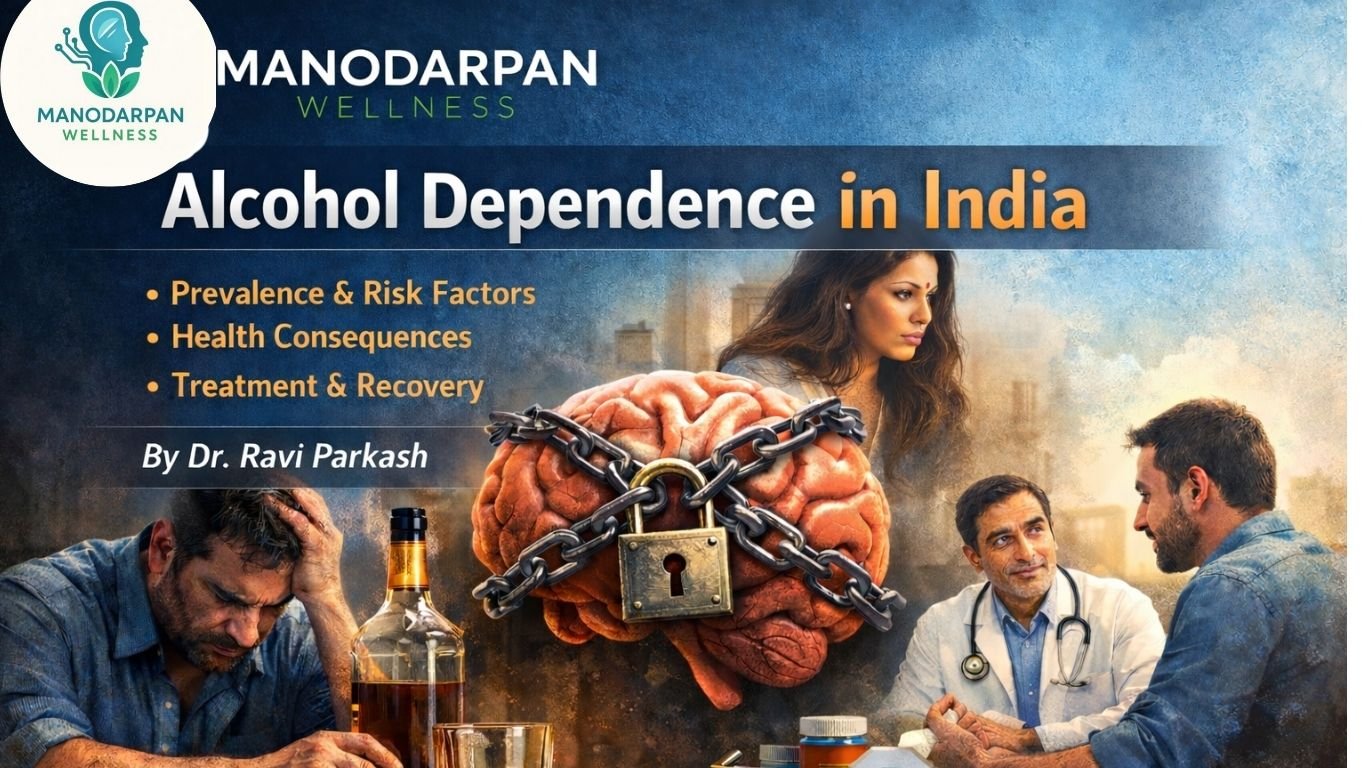
Alcohol Dependence in India: A Growing Mental Health Concern By Dr. Ravi Parkash, Consultant Psychiatrist Manodarpan Wellness
- 08 Jan 2026
- Alcohol dependence in India, alcohol addiction tre...
Introduction
Alcohol dependence is emerging as one of the most serious yet underestimated mental health challenges in India. With changing lifestyles, increased availability of alcohol, and reduced age of initiation, alcohol use disorder (AUD) has become a major contributor to physical illness, psychiatric morbidity, family breakdown, and socioeconomic burden.
Scientific evidence from PubMed-indexed Indian studies confirms that alcohol dependence is not limited to urban areas or specific socioeconomic groups. It is a chronic medical condition that requires early identification and professional treatment.
What Is Alcohol Dependence?
Alcohol dependence, clinically termed Alcohol Use Disorder (AUD), is characterized by:
-
Loss of control over alcohol intake
-
Strong craving or compulsion to drink
-
Tolerance and withdrawal symptoms
-
Continued drinking despite physical, psychological, or social harm
AUD is recognized as a brain-based disorder involving neurochemical changes, impaired judgment, and emotional dysregulation.
Prevalence of Alcohol Dependence in India
Indian epidemiological studies published in PubMed-indexed journals highlight alarming trends:
-
Approximately 20–30% of individuals who consume alcohol in India develop dependence
-
National surveys show alcohol use in 18–23% of adult men and 1–2% of women, with dependence being significantly higher among men
-
Certain states and districts report very high prevalence, particularly in rural and tribal populations
-
Early onset drinking (before 21 years) significantly increases the risk of dependence later in life
Research also shows wide inter-state variation, influenced by alcohol availability, cultural acceptance, and state-level policies.
Risk Factors for Alcohol Dependence
Evidence-based studies identify multiple risk factors for alcohol dependence in the Indian population:
Biological Factors
-
Genetic vulnerability
-
Family history of alcohol dependence
Psychological Factors
-
Stress, anxiety, depression
-
Poor coping skills
-
Impulsivity and emotional dysregulation
Social and Cultural Factors
-
Peer pressure and social normalization of drinking
-
Easy access and low pricing of alcohol
-
Occupational stress and migration
-
Co-use of tobacco and other substances
Men, individuals from lower socioeconomic backgrounds, and those with limited education show higher rates of harmful alcohol use in Indian studies.
Health Consequences of Alcohol Dependence
Alcohol dependence affects nearly every organ system and significantly impacts mental health:
Physical Health Effects
-
Liver diseases (fatty liver, cirrhosis)
-
Hypertension and heart disease
-
Gastritis, pancreatitis, and nutritional deficiencies
-
Increased risk of accidents and injuries
Mental Health Effects
-
Depression and anxiety disorders
-
Sleep disturbances
-
Increased risk of suicide
-
Cognitive impairment
Family and Social Impact
-
Domestic violence and marital conflict
-
Financial instability
-
Emotional trauma in children
-
Workplace absenteeism and reduced productivity
Indian studies report high levels of family distress and emotional abuse in households affected by alcohol dependence.
Why Alcohol Dependence Is Often Untreated in India
Despite its prevalence, alcohol dependence remains under-treated due to:
-
Stigma around mental illness and addiction
-
Misconception that addiction is a “lack of willpower”
-
Fear of social judgment
-
Limited awareness about medical treatment options
As a result, many individuals seek help only after severe health or family consequences occur.
Evidence-Based Treatment for Alcohol Dependence
Alcohol dependence is treatable with timely and structured intervention.
Medical Management
-
Safe detoxification under medical supervision
-
Medications to reduce craving and prevent relapse
Psychological Therapies
-
Cognitive Behavioral Therapy (CBT)
-
Motivational Enhancement Therapy
-
Relapse prevention counseling
Family Involvement
-
Psychoeducation for family members
-
Improving communication and emotional support
Long-Term Recovery
-
Regular follow-ups
-
Lifestyle modification
-
Stress management and emotional regulation
Early intervention significantly improves outcomes and quality of life.
Role of Mental Health Professionals
Consulting a qualified psychiatrist for alcohol addiction is crucial, as alcohol dependence often co-exists with depression, anxiety, sleep disorders, or trauma. A holistic, individualized approach ensures both addiction and underlying mental health issues are addressed.
Conclusion
Alcohol dependence in India is a growing public health concern backed by strong scientific evidence from PubMed-indexed research. It is not a moral failing but a treatable medical condition. Awareness, early screening, professional treatment, and supportive family environments are key to recovery.
At Manodarpan Wellness, we believe in compassionate, confidential, and evidence-based care to help individuals reclaim control over their lives.