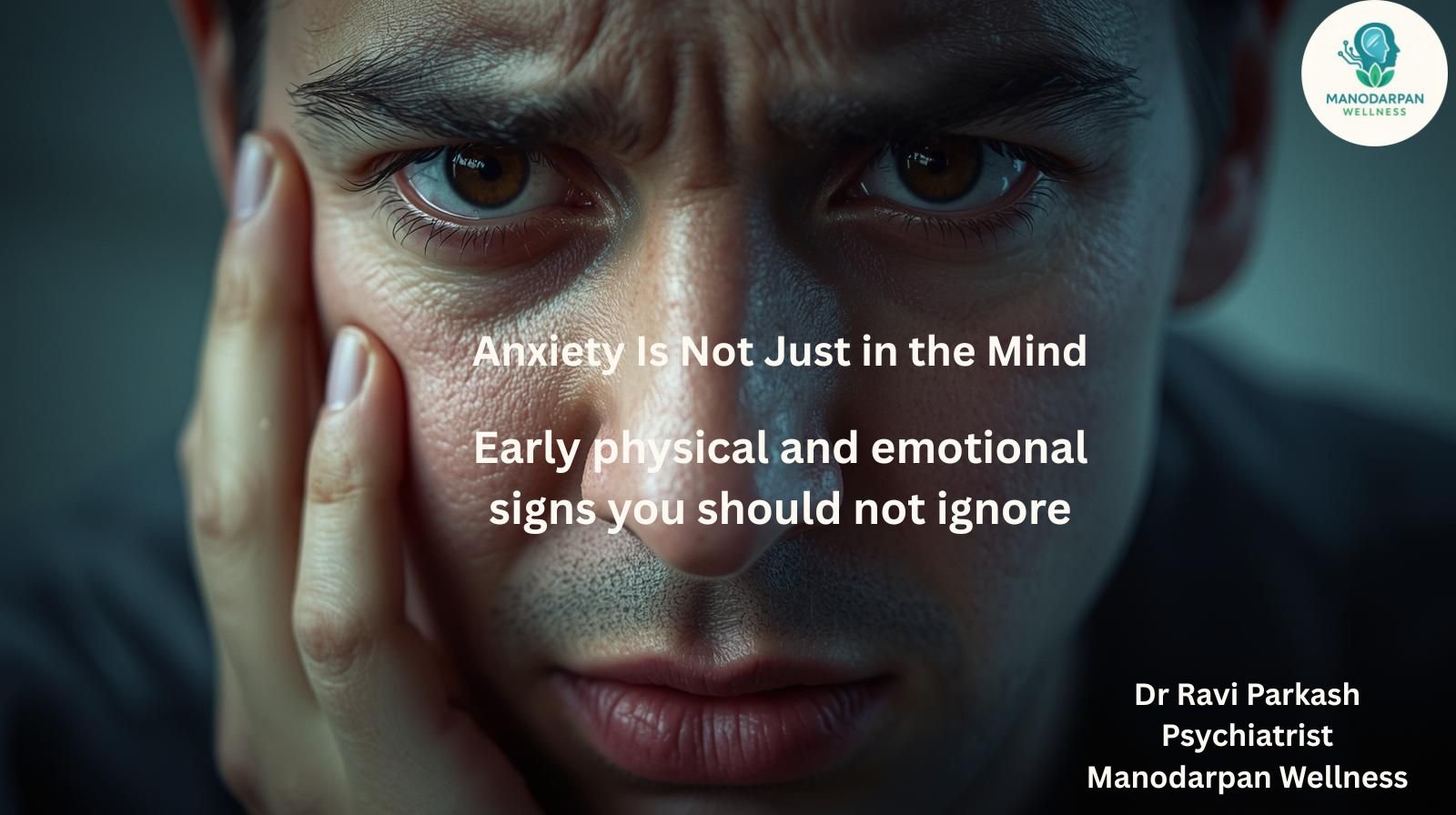
10 Early Signs of Anxiety Disorder Most People Ignore By Dr Ravi Parkash | Manodarpan Wellness
- 22 Jan 2026
- anxiety disorder early signs, early symptoms of an...
Introduction
Anxiety disorders are among the most common mental health conditions globally, yet they often go unrecognized in their early stages. Many individuals dismiss early symptoms as “stress,” “overthinking,” or a temporary phase.
Scientific evidence from PubMed-indexed research shows that anxiety usually begins subtly, with both psychological and physical signs appearing long before severe symptoms like panic attacks. Early recognition can prevent long-term complications and improve recovery outcomes.
This article explains the 10 early signs of anxiety disorder that most people ignore.
1. Constant Worry Without a Clear Reason
Occasional worry is normal, but persistent and uncontrollable worry is an early indicator of anxiety disorder.
You may notice:
-
Excessive worrying about daily routine matters
-
Difficulty stopping negative thoughts
-
Repeated anticipation of worst-case scenarios
Clinical insight: Research shows excessive worry is a core feature of generalized anxiety and is linked to altered stress regulation in the brain.
2. Physical Symptoms With Normal Medical Reports
Anxiety frequently presents with physical symptoms, leading patients to consult physicians first.
Common symptoms include:
-
Chest tightness or palpitations
-
Breathlessness
-
Gastric discomfort
-
Head heaviness or dizziness
Important: PubMed studies confirm that anxiety activates the autonomic nervous system, producing real physical symptoms even when investigations are normal.
3. Inability to Relax Even During Rest
A persistent feeling of being “on edge” is a subtle but important early sign.
People often report:
-
Constant inner tension
-
Feeling alert without danger
-
Difficulty calming the mind
Neurobiological research shows sustained brain hyperarousal in anxiety disorders.
4. Irritability and Low Frustration Tolerance
Anxiety often manifests as irritability rather than fear, especially in adults.
You may experience:
-
Frequent anger over small issues
-
Emotional exhaustion
-
Reduced patience
Studies indicate anxiety impairs emotional regulation circuits, leading to increased irritability.
5. Sleep Disturbance (Especially Difficulty Falling Asleep)
Sleep problems are one of the earliest warning signs of anxiety.
Typical patterns:
-
Difficulty initiating sleep
-
Racing thoughts at night
-
Non-refreshing sleep
Research links anxiety with increased cortisol and nervous system overactivity, which disrupt sleep.
6. Avoidance of Previously Manageable Situations
Early anxiety may present as subtle avoidance rather than obvious fear.
Examples:
-
Avoiding social interactions
-
Delaying phone calls or tasks
-
Skipping responsibilities
Behavioral studies show avoidance strengthens anxiety over time if untreated.
7. Poor Concentration and Mental Fog
Many patients complain of:
-
Forgetfulness
-
Difficulty focusing
-
Reduced work efficiency
Evidence shows anxiety diverts mental resources toward threat monitoring, impairing attention and memory.
8. Muscle Tension and Unexplained Body Pain
Chronic muscle tension is a biological hallmark of anxiety disorders.
Common complaints:
-
Neck and shoulder pain
-
Jaw clenching
-
Frequent tension headaches
Research confirms prolonged sympathetic nervous system activation causes sustained muscle contraction.
9. Increased Sensitivity to Noise, Light, or Crowds
People with early anxiety often feel overwhelmed in busy environments.
You may notice:
-
Discomfort in crowds
-
Sensitivity to noise
-
Feeling overstimulated
Neuroimaging studies show heightened amygdala activity, increasing sensory alertness.
10. Reassurance Seeking and Health Anxiety
Repeated reassurance seeking is an often-ignored sign.
Examples:
-
Excessive online symptom searching
-
Multiple doctor visits despite normal tests
-
Constantly seeking validation from others
Research links this behavior to intolerance of uncertainty, a key anxiety trait.
Why Early Identification of Anxiety Is Important
Clinical studies consistently show that:
-
Early treatment improves outcomes
-
Untreated anxiety becomes chronic
-
Anxiety increases the risk of depression and sleep disorders
Anxiety disorders are highly treatable with timely intervention.
When Should You Consult a Psychiatrist?
Seek professional help if:
-
Symptoms last more than 2–3 weeks
-
Daily functioning is affected
-
Medical tests are normal but symptoms persist
Treatment Options at Manodarpan Wellness
-
Detailed psychiatric evaluation
-
Evidence-based psychotherapy
-
Lifestyle and sleep guidance
-
Medication when clinically indicated
Conclusion
Anxiety is not weakness.
It is a treatable brain-body condition backed by science. Recognising early signs can prevent unnecessary suffering and long-term complications.
If you or your loved one identify with these symptoms, early professional help can change the course of anxiety.
👉 Book an online or in-clinic consultation at Manodarpan Wellness