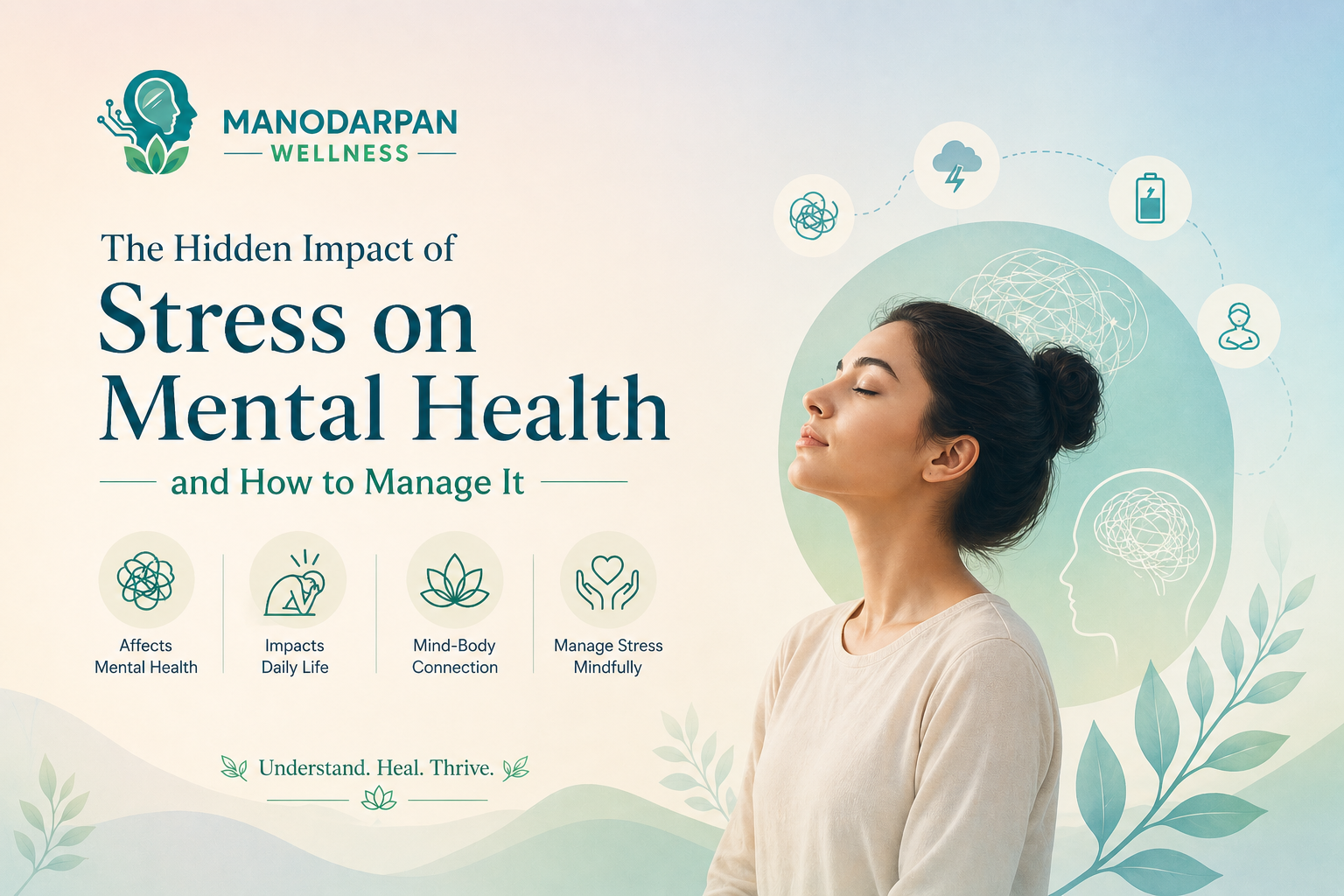
The Hidden Impact of Stress on Mental Health and How to Manage It
- 26 Apr 2026
- stress management, stress and mental health, anxie...
Stress has become a common part of modern life. From work pressure and financial responsibilities to family concerns and personal expectations, many people experience stress on a daily basis. While a small amount of stress can motivate us to complete tasks and stay focused, ongoing stress can quietly affect both mental and physical health.
Often, people ignore stress until it starts interfering with sleep, mood, relationships, or productivity. Understanding how stress impacts mental wellbeing is the first step toward managing it effectively.
What Is Stress?
Stress is the body’s natural response to challenges or demands. It can occur when we feel overwhelmed, pressured, or unable to cope with a situation.
Stress may be caused by:
- Work deadlines and workload
- Relationship conflicts
- Financial difficulties
- Academic pressure
- Health concerns
- Major life changes
Short-term stress is normal, but long-term stress can become harmful if not addressed.
How Stress Affects Mental Health
When stress continues for a long time, it can affect the way we think, feel, and behave.
- Anxiety and Overthinking:
Chronic stress can make the mind restless, leading to constant worry and racing thoughts.
- Mood Changes:
Stress often causes irritability, frustration, and emotional exhaustion.
- Difficulty Concentrating:
Mental overload can reduce focus, memory, and decision-making ability.
- Sleep Problems:
Stress can make it harder to fall asleep or stay asleep.
- Depression Risk:
If stress remains unmanaged for a long time, it may contribute to feelings of hopelessness or low motivation.
Signs You May Be Experiencing Too Much Stress
- Feeling tired even after rest
- Frequent headaches or body tension
- Difficulty sleeping
- Lack of patience or irritability
- Loss of interest in activities
- Trouble focusing
- Feeling emotionally drained
- Avoiding people or responsibilities
Recognizing these signs early can help prevent deeper mental health concerns.
Healthy Ways to Manage Stress
- Practice Deep Breathing and Relaxation:
Taking a few minutes each day for slow breathing or meditation can calm the nervous system.
- Maintain a Routine:
Having a regular schedule creates stability and reduces mental overload.
- Stay Physically Active:
Exercise helps release stress hormones and improves mood.
- Limit Screen Time:
Constant exposure to screens and social media can increase stress and mental fatigue.
- Talk to someone:
Sharing your feelings with a trusted person or professional can provide relief and clarity.
- Prioritize Sleep:
Quality sleep is essential for emotional balance and stress recovery
When to Seek Professional Support
If stress begins affecting your daily life, relationships, sleep, or emotional wellbeing, professional guidance can be highly beneficial.
At Manodarpan Wellness, experienced mental health professionals provide personalized support to help individuals understand their stress triggers, build coping strategies, and restore emotional balance.
Conclusion
Stress may be a common part of life, but it should not become a permanent burden. Ignoring ongoing stress can gradually impact mental health, productivity, relationships, and overall quality of life. What starts as everyday pressure can turn into anxiety, burnout, or emotional exhaustion when left unmanaged.
The good news is that stress can be managed with the right habits, emotional support, and timely intervention. Small changes such as creating healthy routines, improving sleep, staying active, and expressing emotions can make a meaningful difference.
If stress feels overwhelming or difficult to handle alone, seeking professional help is a positive and responsible step. Taking care of your mental health today can lead to a calmer, healthier, and more balanced tomorrow.